
Need to get your driver's license back? An SR-22 in Colorado is a certificate your insurer files with the DMV to prove you have car insurance. At Rocky Mountain Insurance Services, we specialize in affordable SR-22 insurance, helping you navigate the process quickly to get back on the road.
Table of contents
- What Exactly is an SR-22 Filing?
- What Triggers the Need for SR-22 Insurance in Colorado?
- How Does the SR-22 Filing Process Work in Colorado?
- Why is Continuous SR-22 Coverage Critical in Colorado?
- How Can I Find Affordable SR-22 Insurance in Colorado?
- Frequently Asked Questions
What Exactly is an SR-22 Filing?
An SR-22 is a certificate of financial responsibility, not a type of insurance policy. Think of it as a report card for your insurance. Your insurance company files this certificate directly with the state to verify that you carry at least the minimum required auto liability coverage, as noted by legal experts at the Orr Law Firm and Tiftickjian Law Firm, P.C.
This filing links your auto insurance policy to the Colorado DMV's records. It acts as a monitoring system. If your policy lapses for any reason, your insurer is legally required to notify the DMV, which can trigger an immediate re-suspension of your license.
Definition: Certificate of Financial Responsibility
The SR-22 is formally an endorsement to your auto insurance policy that your provider files on your behalf with the Colorado Division of Motor Vehicles (DMV). This filing serves as official, ongoing proof that you meet the state's minimum liability insurance requirements, as defined by the Colorado Department of Revenue - Motor Vehicle division. It is not a policy you can buy separately.
What Triggers the Need for SR-22 Insurance in Colorado?
The Colorado DMV requires an SR-22 filing after certain convictions or administrative actions classify you as a high-risk driver. This certificate is mandatory to prove you're insured while your driving privileges are probationary. According to multiple sources, including the Damascus Road Law Group and Premier Group Insurance, the most common triggers for needing SR-22 insurance in Colorado include:
- DUI/DWAI Convictions: Driving Under the Influence (DUI) or Driving While Ability Impaired (DWAI) are the most frequent reasons.
- Driving Without Insurance: A conviction for operating a vehicle without the state-mandated liability coverage will result in an SR-22 requirement.
- Serious Traffic Offenses: Violations such as reckless driving or involvement in an at-fault accident resulting in serious injury can trigger the requirement.
- Excessive License Points: Accumulating too many points on your driving record in a short period can lead to a suspension and a subsequent SR-22 mandate.
- License Suspension or Revocation: Any action that results in the suspension or revocation of your driver's license, including failure to pay child support or other court-ordered judgments, can necessitate an SR-22 for reinstatement.
How Does the SR-22 Filing Process Work in Colorado?
Getting an SR-22 filed in Colorado is a straightforward process, but every step must be followed precisely to avoid delays in reinstating your license. The most important thing to know is that you do not file the form yourself; your insurance carrier handles the entire process with the state.
- Secure an Auto Insurance Policy: First, you must have an active auto insurance policy that meets Colorado's minimum liability limits. The state mandates coverage of at least:
- $25,000 for bodily injury per person
- $50,000 for total bodily injury per accident
- $15,000 for property damage ...as confirmed by SR22 Direct.
- Inform Your Insurer: You must notify your insurance provider that you need an SR-22 filing. Not all insurance companies offer this service, as it is reserved for high-risk drivers. If your current carrier does not file SR-22s, you will need to find a new one.
- Pay the Filing Fee: Your insurer will charge a one-time fee to file the SR-22 certificate. This fee typically ranges from $25 to $50, according to Serenity Insurance and Ultracar Insurance. This is a processing fee and is separate from your insurance premium.
- Insurer Files with the DMV: Your insurance company will file the SR-22 electronically with the Colorado Department of Revenue. Once the DMV accepts the filing, your insurance status is officially certified.
- Confirm Reinstatement: You can then complete any other steps required by the DMV, such as paying reinstatement fees, to get your license back.
Why is Continuous SR-22 Coverage Critical in Colorado?
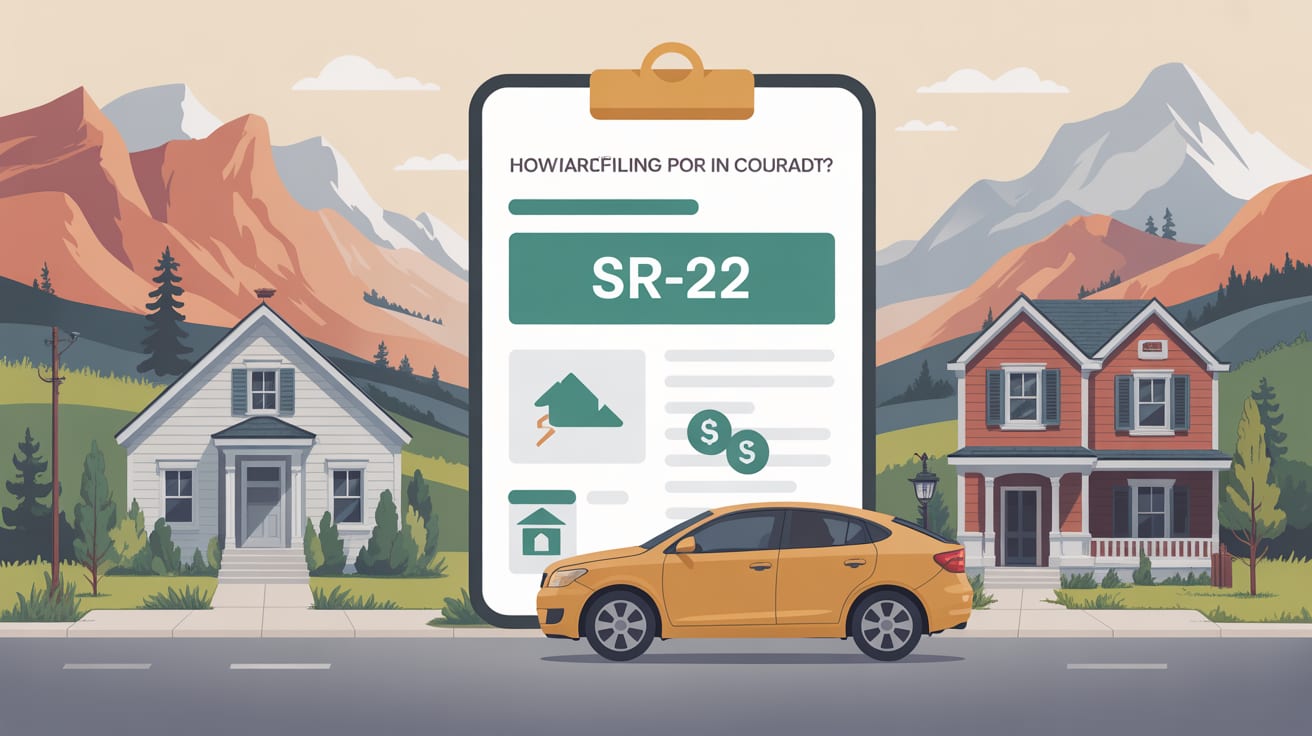
Maintaining continuous insurance coverage throughout your SR-22 period is non-negotiable. In Colorado, the standard requirement lasts for three years, a timeframe confirmed by numerous sources including the Aztlan Insurance Agency and Fort Collins Insurance. This three-year clock starts on the date your license is reinstated, and any interruption has serious consequences.
A lapse in coverage has severe consequences. If you miss a premium payment, cancel your policy, or let it expire, your insurance company is legally obligated to file an SR-26 form with the DMV, which certifies the cancellation of your policy. As the Colorado Department of Revenue - Motor Vehicle confirms, this notification will result in the immediate suspension of your driving privileges. To get your license back, you will have to restart the entire reinstatement process, and the three-year SR-22 filing period may begin all over again.
This strict enforcement mechanism is why managing your policy and payments is crucial. The SR-22 system is designed to ensure high-risk drivers never have a gap in their financial responsibility.
How Can I Find Affordable SR-22 Insurance in Colorado?
Finding affordable SR-22 insurance in Colorado can feel challenging. While the SR-22 filing itself has a small administrative fee, the underlying driving violation is what significantly increases your premiums. The key is a strategic approach. As an independent insurance broker, Rocky Mountain Insurance Services specializes in helping drivers in your exact situation navigate this market.
You generally have two options: stay with your current insurer (if they offer SR-22s) or shop for a new policy with a carrier that specializes in high-risk drivers. Each path has trade-offs.
| Approach | Cost & Premiums | Filing Speed & Convenience | Long-Term Considerations |
|---|---|---|---|
| Stay with Current Insurer | Potentially very high premium increase; may lose multi-policy or good driver discounts. | Can be convenient if they offer SR-22s, but some mainstream carriers are slow to file. | Your relationship may be strained, and they could non-renew your policy at the next term. |
| Seek a High-Risk Specialist Carrier | Premiums may be more competitive as these companies specialize in pricing this specific risk. | Often very fast and efficient with electronic filings, as this is their core business. | Designed for the SR-22 period; you can shop for standard insurance again once the requirement ends. |
| Work with an Independent Broker | We compare rates from multiple carriers, including specialists, to find the most competitive option. | We handle the entire process, ensuring the filing is done correctly and quickly to expedite reinstatement. | We provide a long-term strategy, helping you manage coverage during the SR-22 period and find better rates after. |
Working with an independent broker like Rocky Mountain Insurance Services gives you access to multiple quotes without having to contact each company individually. We understand the underwriting guidelines for high-risk policies and can place you with a carrier that offers the best combination of price and reliable service for your situation.
Regaining your driving privileges is the first step. The next is managing your insurance costs and maintaining a clean record to get back to standard, lower rates. We are here to help you with both. Contact Rocky Mountain Insurance Services — 2175 S Jasmine St #109, Centennial, CO 80015 — (303) 699-1346 today for a personalized quote and expert guidance on your Colorado SR-22 filing.
Frequently Asked Questions
Can I get an SR-22 in Colorado if I don't own a car? Yes, you can satisfy the requirement by purchasing a non-owner auto insurance policy. This policy provides liability coverage for you when you drive a vehicle you do not own. Your insurer will then file the SR-22 certificate based on this non-owner policy.
How long does an SR-22 stay on my record? The SR-22 filing requirement in Colorado typically lasts for three consecutive years from your license reinstatement date. While the filing requirement ends after this period, the underlying conviction (like a DUI) will remain on your driving record for much longer and will continue to impact your insurance rates.
What happens after my three-year SR-22 period ends? The SR-22 filing does not automatically fall off your policy. You must contact your insurance provider to have them remove the SR-22 endorsement and file the necessary paperwork with the DMV. If you do not, you may continue to be classified and rated as a high-risk driver.
How much does an SR-22 increase insurance premiums in Colorado? The SR-22 filing itself is just a form with a small fee. The significant premium increase comes from the violation that caused the SR-22 requirement. A DUI or other major violation can cause your auto insurance rates to double or even triple, depending on your overall driving history and other rating factors.
Can I pay for my SR-22 insurance policy in full? Yes, and it is often a wise strategy. Paying your policy premium in full for a six-month or one-year term completely eliminates the risk of a lapse due to a missed monthly payment. This ensures your coverage remains active and prevents an accidental license suspension.
Sources
Want this reviewed against your actual policy?
We will read what you have now and tell you plainly where the gaps are. No cost, no pressure — call (303) 699-1346 or send a message.
Frequently asked questions
Can I get an SR-22 in Colorado if I don't own a car?
How long does an SR-22 stay on my record?
What happens after my three-year SR-22 period ends?
How much does an SR-22 increase insurance premiums in Colorado?
Can I pay for my SR-22 insurance policy in full?
- Tagged
- sr-22
- colorado sr-22
- high-risk auto insurance
- dui insurance
- license reinstatement